
Steel vs Fiberglass vs Wood Entry Doors: A Material Guide for Malden Homes
You have already decided you want a new entry door. The next question is what it should be made of. In Malden, that comes down to three materials we install: steel, fiberglass, and painted wood (often a solid-core build). Each one handles a New England winter differently, locks differently, ages differently, and looks right on a different style of house.
The material you pick is not just a budget call. A west-facing cape side entry that takes wind-driven rain has different needs than a sheltered Edgeworth colonial front. This guide compares the three on the things that actually matter here: security, insulation, maintenance, durability, and fit with the older housing stock across the Greater Malden area.
If you are still deciding between an entry door and a patio door, that is a different question. We cover it in our guide to entry doors versus patio doors for a Malden home. This post assumes the entry door is settled and you are comparing materials.
The Bottom Line
- Steel is usually the value option. Strong, secure, and well insulated when foam-cored, but it can dent and the finish needs care in high-traffic or exposed spots.
- Fiberglass is the durable cold-climate upgrade. It resists dents and weather, holds a foam core for a low U-factor, and can mimic wood grain (DOE Energy Saver, archived June 2026).
- Painted wood / solid-core is the look for colonials, Victorians, and capes where the door is part of the facade. Warm and customizable, with the most maintenance.
- A door is only as efficient as its install. The frame, threshold, and weatherstrip do as much work as the slab.
How do steel, fiberglass, and wood entry doors compare?
All three materials can make a secure, insulated entry door, but they trade off on durability, maintenance, and looks. The Department of Energy notes that most modern steel and fiberglass entry doors are built around a polyurethane foam core, and that a foam-cored door without glass can offer more than five times the insulating value of a solid wood door of the same size (DOE Energy Saver, Doors, archived June 2026). Here is the short version before we go deeper.
Steel is the value choice: strong, secure, and a good fit for triple-decker and two-family entries that see heavy daily traffic. Fiberglass is the durable upgrade: it shrugs off dents and weather, insulates well, and can be finished to look like wood. Painted wood and solid-core doors are the look you want when the door is part of a colonial or Victorian facade, with more maintenance as the price of that look.
Think of it as a spectrum. Steel leads on value, fiberglass leads on low-maintenance durability, and wood leads on appearance and customization. None of them is wrong. The right one depends on your house, your exposure, and how much upkeep you want to sign up for.
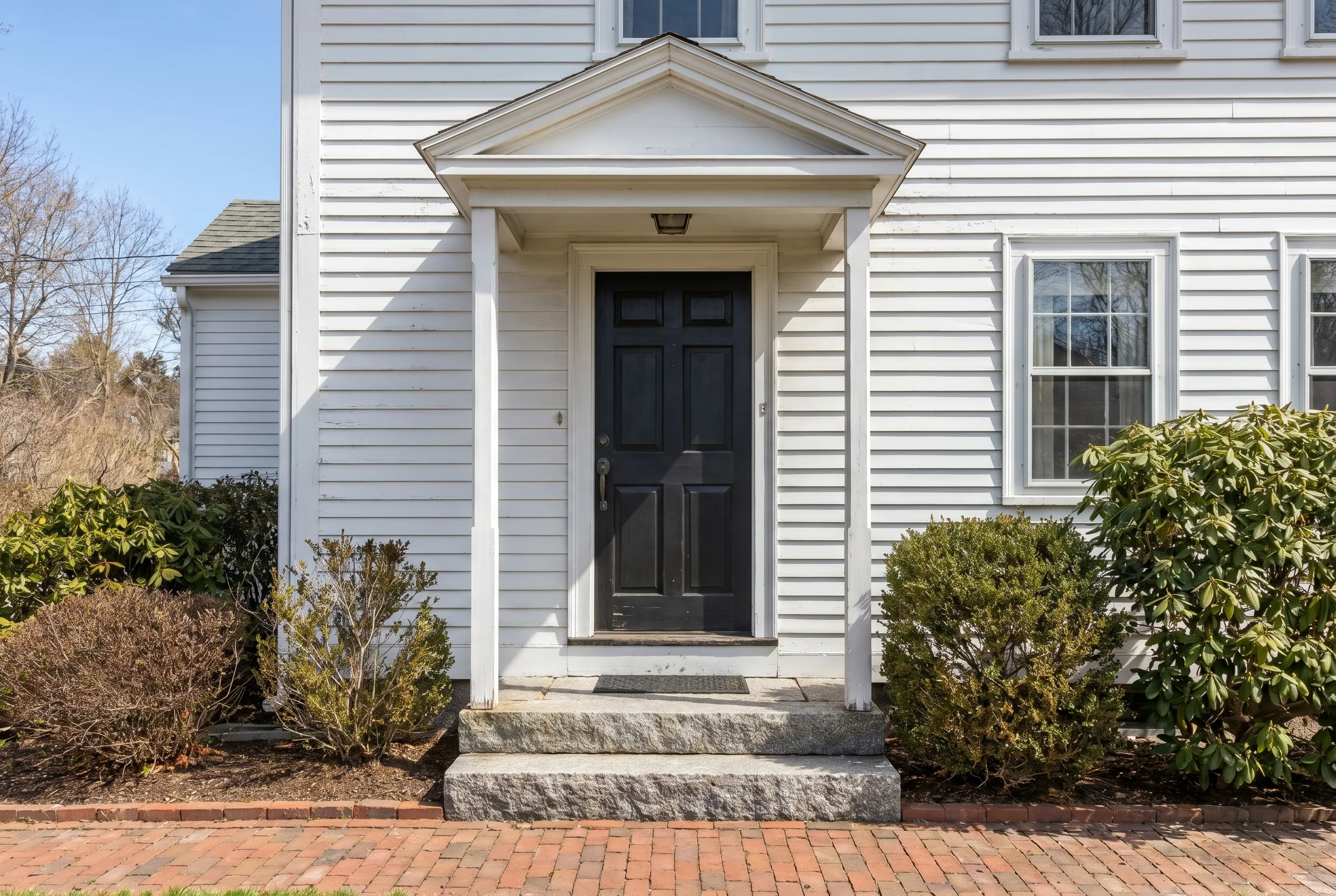
Are steel entry doors a good choice in New England?
Steel entry doors are the value option, and they are a strong fit for high-traffic Malden entries like triple-decker and two-family front and rear doors. A steel door is built from a steel skin over a wood or steel frame, with a foam core inside. The Department of Energy points out that this foam core is what gives steel and fiberglass doors their insulating value, well above a hollow or solid-wood slab (DOE Energy Saver, archived June 2026).
On security, steel is hard to beat. The skin resists kicks and pry attempts better than wood, and it accepts a deadbolt and a reinforced strike plate just as well as any other material. For a Faulkner two-family or a Malden triple-decker where the front door takes constant use, that toughness pays off.
Where does steel struggle? Two places. First, dents. A steel skin can take a visible dent from a thrown bag, a kicked snow boot, or a moving day mishap, and a deep dent is hard to make invisible again. Second, finish. In an exposed, high-traffic doorway, the painted finish needs attention over time, and scratches that reach bare steel can rust if you ignore them. Keep the finish intact and a steel door holds up for years. Let it go and the weather finds the weak spot.
For a buyer who wants strong security and solid winter performance without paying for the top tier, steel is often the sensible answer. We install steel entry doors across Malden and the Greater Malden area, and we will tell you honestly when a doorway is exposed enough that fiberglass is the better long-term spend.
Why is fiberglass often the recommended entry door material?
Fiberglass is frequently the cold-climate recommendation because it pairs a low-maintenance, dent-resistant skin with a foam core that insulates as well as steel. The Department of Energy groups fiberglass with steel for energy performance, both built around insulating foam that outperforms solid wood (DOE Energy Saver, Doors, archived June 2026). For a New England winter, that thermal break is exactly what you want at the front door.
The durability is the real draw. Fiberglass does not dent like steel and does not swell, warp, or rot like wood. It handles temperature swings and wind-driven rain without the maintenance cycle a wood door demands. On a Maplewood cape side entry that takes afternoon sun and weather off an open driveway, that resistance is worth a lot over the life of the door.
Fiberglass also solves the looks problem. A fiberglass skin can be molded with a wood-grain texture and stained or painted, so you can get the warmth of a wood-look door on an Edgeworth colonial front without the annual refinishing. That makes it a flexible pick: it suits a plain modern entry and a period-correct colonial face equally well.
The trade-off is mainly cost and feel. Fiberglass typically sits above steel on price, and a few homeowners simply prefer the heft and authenticity of real wood. For most Greater Malden homes, though, fiberglass is the door that asks the least of you after it is installed. When you want an entry door for an entry door in Malden that performs in winter and stays low-maintenance, it is usually the first material we suggest.
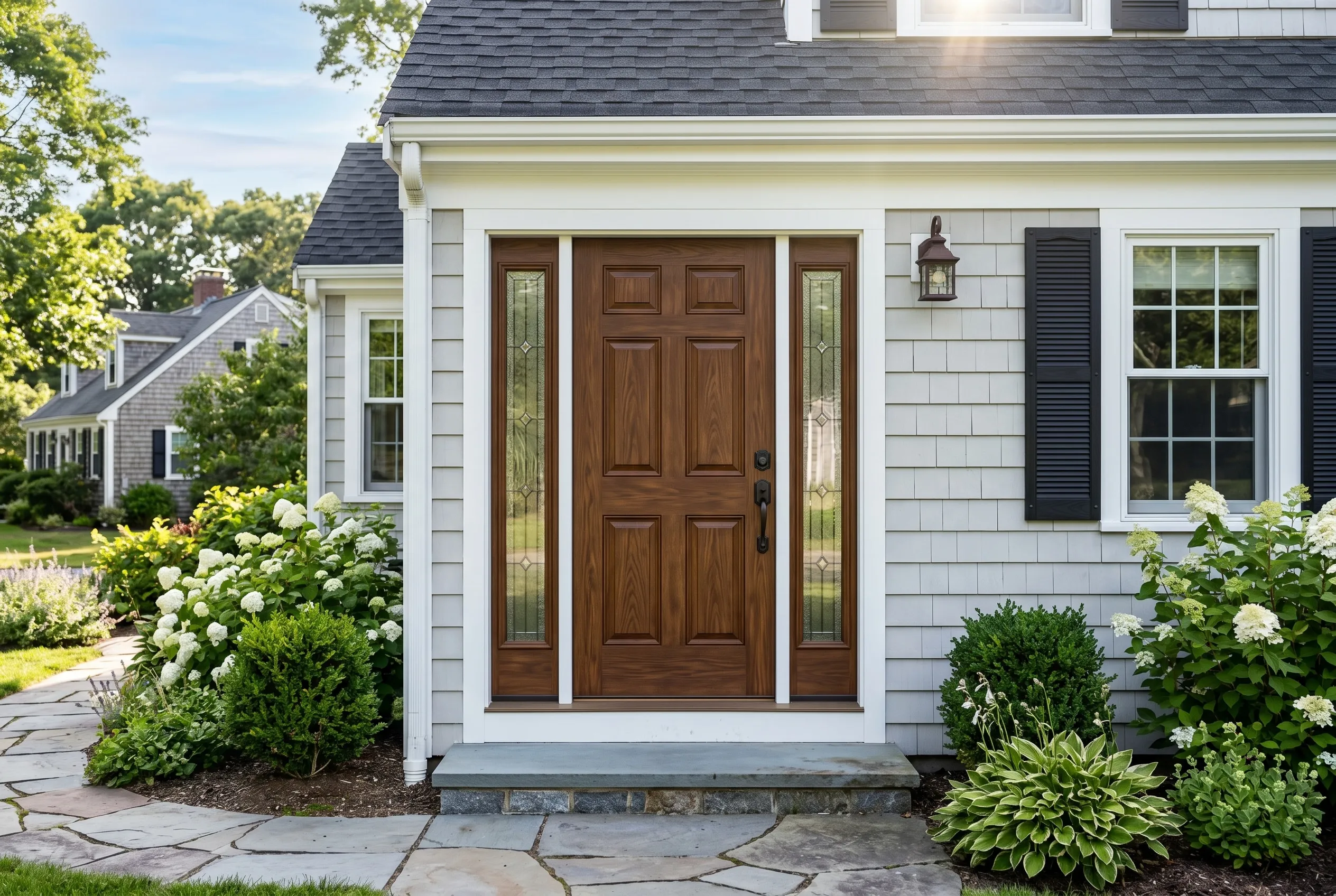
When is a painted wood or solid-core door the right call?
A painted wood or solid-core door is the right call when the door is part of the facade, which is common on Edgeworth colonials, Oak Grove Victorians, and older capes. On those homes the front door carries the architectural character, and real wood gives you the proportions, panel detail, and finish that period styles were built around. It is the look fiberglass imitates and steel cannot match.
Wood also wins on customization. It can be sized, shaped, and detailed to fit an out-of-square opening on a century-old house, and it takes paint or stain in any direction you want to go. For a homeowner restoring a Victorian front entry, a solid-core wood door is often the only material that looks correct.
The trade-off is maintenance and winter performance. Wood expands and contracts with humidity and temperature, so it needs a sound finish to keep moisture out, and that finish needs renewing over time, especially on a sun- and weather-exposed elevation. On energy, a solid wood slab generally insulates less than a foam-cored steel or fiberglass door, which is one reason the Department of Energy highlights foam-core construction for thermal performance (DOE Energy Saver, archived June 2026).
So when is wood the right answer anyway? When the look matters more than the upkeep, the opening is reasonably sheltered (a covered colonial entry, not a wind-blasted side door), and you are willing to keep the finish maintained. For the right house, nothing else looks the part.
How do you choose the right entry door material for your home?
Start with the house and the exposure, then match the material. A sheltered colonial front can carry painted wood; an exposed cape side entry is better in fiberglass; a hard-working triple-decker entry is well served by steel. To compare any door on winter performance, look for the U-factor on the National Fenestration Rating Council label, the rating standard ENERGY STAR relies on to certify doors (NFRC). For an entry door, the ENERGY STAR label is the shortcut: it independently certifies the door’s energy performance for our region (ENERGY STAR).
Here is the quick mapping we use across the Greater Malden area:
- Malden triple-decker / Faulkner two-family front or rear entry: steel for value and toughness, fiberglass if the doorway is exposed.
- Maplewood cape side entry: fiberglass, for dent and weather resistance on a high-traffic, often west-facing door.
- Edgeworth colonial front: fiberglass with a wood-grain finish for low maintenance, or solid-core wood if the period look is the priority and the entry is sheltered.
- Oak Grove Victorian front: painted wood or solid-core, where the door is part of the facade.
The slab is only part of the job. On older Greater Malden homes, the frame, threshold, and weatherstrip often matter more than which material you picked, because a settled opening leaks air no matter how good the door is. We confirm the threshold sits flush to the finished floor, the weatherstrip compresses evenly, and the sidelights or transoms (if your entry has them) are flashed and sealed. When the old frame is rotted or out of square, we can replace the frame and threshold, not just hang a new slab in a bad opening.
We install all three materials, and the same factory-trained crew does steel, fiberglass, and painted-wood installs. We work across the Greater Malden area, with entry-door pages for Malden, Medford, Revere, and Everett. For the full list of what we install, see our door and window services.
Frequently asked questions
Is a steel or fiberglass entry door better for a cold climate?
Both perform well because both are built around an insulating foam core, which the Department of Energy notes outperforms a solid wood slab on heat loss (DOE Energy Saver, archived June 2026). Fiberglass edges ahead for many New England homes because it resists dents and weather with less maintenance. Steel is the stronger value if upkeep is not a concern.
Is a wood front door worth it in New England?
It can be, when the look matters and the entry is sheltered. A painted wood or solid-core door gives an Edgeworth colonial or Oak Grove Victorian the period-correct facade that steel cannot match and fiberglass only imitates. The trade-off is maintenance: wood needs a sound finish renewed over time to keep New England weather out.
Which entry door material lasts the longest with the least maintenance?
Fiberglass typically asks the least of you after install. It does not dent like steel or swell, warp, and rot like wood, and it handles temperature swings and wind-driven rain without an annual refinishing cycle. For a high-traffic or exposed Greater Malden entry, that low-maintenance durability is usually the deciding factor.
Do you replace the door frame and threshold or just the door?
Both, when the opening needs it. On older Malden homes a settled or rotted frame leaks air and water no matter how good the new slab is. We can replace the frame and threshold, reset the weatherstrip, and flash any sidelights or transoms, then put the full scope in your written quote before any work starts.
Get a free written quote on your entry door
Comparing entry doors for your home? Get a free written quote. We install steel, fiberglass, and painted-wood doors, replace the frame and threshold when needed, and respond within 24 hours with no high-pressure visit. We install year-round across Malden and the Greater Malden area, so winter installs are routine for us.
Call (833) 639-7274, email info@newsash.com, or request your free written quote. You can also reach us at 15 Waite Ct., Malden, MA 02148.